Their Formations
Thunderstorms
Thunderstorms are formed from cumulonimbus clouds and strong updrafts. Cumulonimbus clouds only form if there is moist air and an unstable atmosphere. When an area of warm air moves upward, if it rises to its condensation level, it will condense on condensation nuclei and form a cloud. If the atmosphere is unstable (great differences in temperature per kilometer) a cloud can grow into a huge cumulonimbus cloud. There are four types of thunderstorms. Information on these four types are listed below.
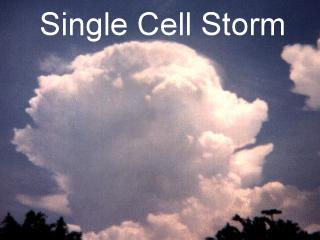
1. Single Cell Storm
- Lasts 20-30 minutes
- Rare because when one cell is formed, usually triggers another cell to be formed as well
- Usually not severe, but severe ones form randomly making them hard to forecast
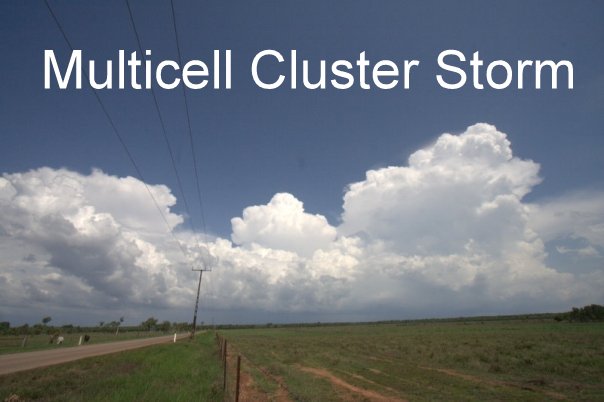
2. Multicell Cluster Storm
- Most common type of thunderstorm, made up of a group or "cluster" of cells
- Each cell lasts about 20 minutes and the total storm may last for hours
- More intense than single cell storms
- Can produce medium sized hail, flash floods and weak tornadoes
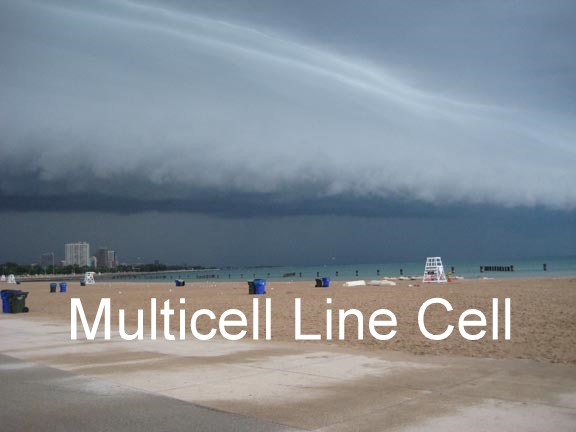
3. Multicell Line Storm a.k.a. Squall Line
- made up of a line of cells, it can be a solid or dotted line
- causes golf ball sized hail, heavy rainfall and weak tornadoes
- most famous for strong downdrafts that sometimes make the line the shape of a bow
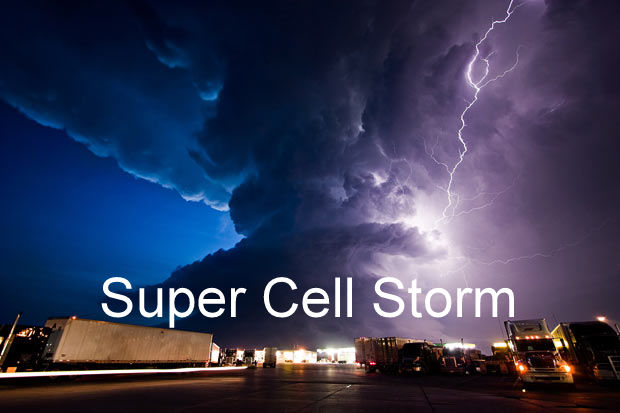
4. Super Cell Storm
- Made up of one main cell like the single cell storm but much stronger with winds 150-175 mph
- Rare but poses a high threat to life and property
- Is unique because it rotates
- Rotation causes giant hail(5+cm in diameter), 80+mph winds and strong violent tornadoes
- Survives for a long time
- Most sever weather is near the center of the storm